



Personal transport is being transformed by the advent of electric bikes - they are green, efficient and great fun. But with their greater power and speed, relative to regular bicycles, comes a critical question for families and young enthusiasts: How old do you have to be before you can ride one legally? The answer is not a number but a complicated weave of local laws, bike classification, and rider maturity. This guide will walk you through the minimum age restrictions on e-bikes to make sure you’re riding as legal and safe as possible.
Legal Age for E-Bike Riding: A Complex Global Landscape
Geography is the primary consideration of the minimum riding age for an e-bike since rules and regulations differ greatly from country to state. There is no one international standard, so riders should always check their local laws before buying or riding any kind of e-bike. This patchwork of laws can be confusing, but a little knowledge of general trends is a good start to compliance. A rider who's legal in one state could be underage in a neighboring state. Accordingly, the best advice is to check the precise guidelines in your own city, state, or country.
-
United States:
There is no federal law specifying a minimum age. Most states follow a 14 to 16-year-old minimum, though a few set no age limit at all for low-power e-bikes. For instance, states like New York currently require riders to be 16 years old in order to operate an e-scooter, while some do not have any such rule.
-
European Union:
The rules today are more uniform. For a regular 250W pedelec with assistance up to 25 km/h, the minimum age is usually about 14 or 15 years old, but member countries may set their own rules. With S-Pedelecs, the situation is more complicated as they can reach speeds up to 45 km/h. The state will classify these as a moped, requiring a driver's license and a minimum age of 16.
-
United Kingdom:
The UK, which inherited EU rules after Brexit, requires riders of an EAPC (Electrically Assisted Pedal Cycle) to be at least 14 years old for public road use. Those under 14 may only ride on private land with the owner's permission.
-
Canada:
Laws are determined by the individual provinces and territories. The minimum age is 16 in most provinces, including Ontario and British Columbia; it is 12 in Alberta.
How E-Bike Classes Affect Age Requirements
The category of electric bicycle, and therefore the class under which a product falls, significantly affects age, licensing, and registration requirements. E-bikes, for the most part, are divided into two groups: those that have a throttle and/or assist up to 20 mph (32 kph), versus those with assisted speeds above that threshold. It is important to know what these classifications mean as for example, a 14-year-old may be able to legally ride a Class 1 e-bike but not a Class 3. This was done to make sure stronger bikes are ridden by older kids who can cope better with the speeds and risks met in traffic. The selection of the right class of bike is the best instrument to make sure the riders are working in a compliant and safe environment.
-
Class 1 E-Bike:
A pedal-assist only electric bicycle with no throttle. The motor assists only when the rider is pedaling, and it stops providing assistance when the bike exceeds 20 mph (or 25 km/h in the EU). These tend to have the smallest age requirements, if any.
-
Class 2 E-Bike:
This model is featured with a throttle on the handlebar that allows you to move the bike without pedaling. The motor is there to boost you up to 20 mph. The age limits are usually the same as Class 1, but some areas impose more stringent requirements since a throttle is present.
-
Class 3 E-Bike:
A pedal-assist-only e-bike (though some states also permit throttles), which has a maximum assisted speed of 28 mph. Because it is a faster speed, the vast majority do have an even higher minimum age (usually 16) and often legally require wearing helmets.
-
S-Pedelecs (Europe):
These belong in another category, are able to reach a speed of 45 km/h, and are legally considered mopeds, which require insurance, a license plate, a driver's license, etc. The minimum required age is usually 16 years old.

Choosing the Right E-Bike for Young Riders
Youth e-bike riders are at the mercy of their age, but once they reach the legal age, they can go ahead and choose an e-bike for themselves. First off, for a new rider, safety, control, and comfort are the most important. Here’s where ENGWE really shines—building bikes that instill teenagers with confidence.
The ENGWE L20 3.0 Pro
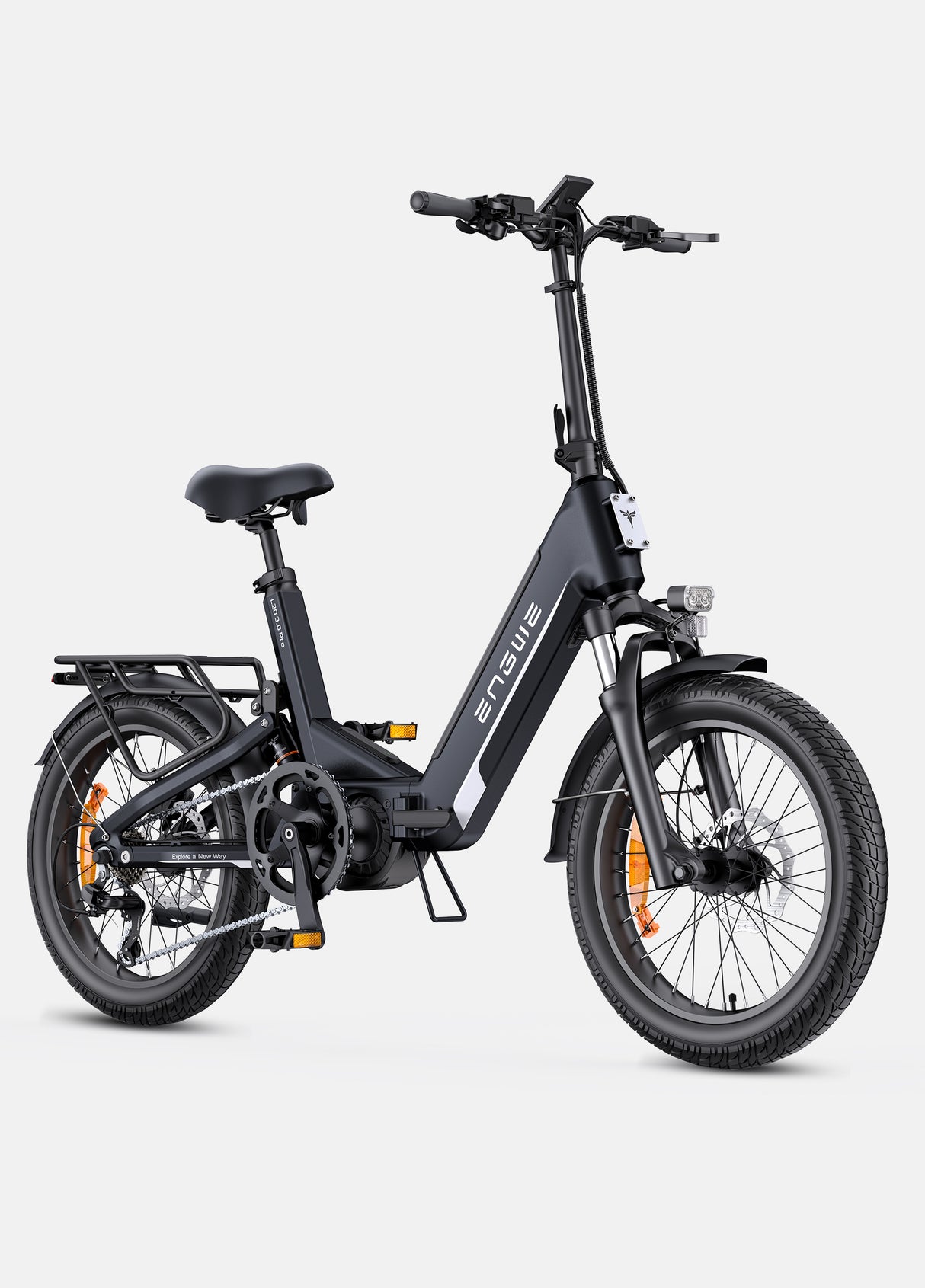
The best bike for a serious teen or an adult wanting a balance of performance and protection is the ENGWE L20 3.0 Pro. The intelligent, user-centered design of this model is not just for transportation - it's a statement of outstanding design and user-focused engineering. This bike is a conscientious product of ENGWE to ensure you have a better riding experience, which can be regarded as a perfect gift for families.

-
Unrivaled Comfort and Control:
The L20 3.0 Pro is the world’s only full-suspension compact electric bike. It has a premium front hydraulic fork and 30mm of rear travel that absorb over 90% of vibrations.
-
Smooth Power Delivery:
You get smooth and intuitive power delivery matched with a massive 100Nm of torque under your control, thanks to the high-performance Mivice 250W mid-drive motor. The built-in torque sensor gives you an extremely smooth pedal assist, replicating the feeling of a natural cycling experience; no jerky starts and it is ideal for new riders.
-
High Performance and Extreme Convenience:
A huge 720Wh Samsung battery offers an unprecedented range of up to 160km, which sets the bar for electric bikes. And since it has 8A fast charging, downtime is kept at a minimum. Featuring a foldable, step-through design for easy on and off and easy storage.
-
Advanced Safety with Security:
Peace of mind is built-in with the advanced ENGWE IoT module. This smart anti-theft system offers real-time alerts for keeping track of where a bike and its rider are at all times, GPS location tracking, and app-based monitoring that sends all the details parents need to know about their child's whereabouts.
-
High-Quality Components:
With high-quality dual-piston hydraulic brakes and 180mm rotors, you're going to get consistent stopping power while the near bombproof stainless steel hardware will ensure that nothing is rusting away on your bike anytime soon.
Beyond the Law: Safety, Gear, and Rider Readiness
Aside from selecting an awesome e-bike, making sure that a young rider is equipped with the appropriate gear and knowledge of how to ride properly is never up for debate. The right safety rules can make a dangerous activity relatively safe and empowering. Here’s why a pre-ride check should be an unbreakable habit and why you need to know your traffic laws. Although many brands sell quality gear, some popular options for helmets and accessories are Giro, Bell and Thousand. The best protection is high-visibility gear; it makes you stand out to drivers. And don't forget, a helmet is the most critical piece of safety equipment you can wear; on every single ride, no matter how short.
Essential Safety Gear Checklist:
- Helmet: Make sure it fits well and is certified for safety (CPSC, MIPS).
- Lights: A white light in front and a red light at the back are essential for visibility, particularly at dawn, dusk and after dark.
- Reflective Gear: A vest, ankle bands or reflective detailing on clothing and your bike itself takes visibility to a new level.
- Bell or Horn: A noise maker to signal you are nearby for pedestrians and other vehicles.
Pre-Ride Safety Check (ABC Quick Check):
| PART | CHECK | REMEDY |
|---|---|---|
| A - Air | Give tires a squeeze to ensure they are properly inflated. | Fill to the recommended PSI rating printed on the tire sidewall. |
| B - Brakes | Check brake levers are firm to the touch. | Refit or see a professional if they feel loose or soft. |
| C - Chain | The chain should be lubricated and tightened adequately. | If it looks dry or dirty, clean and lube. |
Legal adulthood and a good bike are only part of the package; preparation includes physical, cognitive and emotional maturity. A light rider might be tall and strong enough to ride an adult e-bike, while lacking the situational awareness to navigate a busy intersection. Parents and guardians need to determine the ability of a young rider to ride alone with realistic expectations. This multi-faceted method aims to not only make a rider legal, but truly ready for the duties that come with piloting a motorized machine.
Physical Readiness Factors
- Size and Fit: The rider must be able to stand over the top tube with both feet flat on the ground. And they should be able to easily reach the handlebars and brake levers.
- Muscle and Motor Skills: Can the rider safely balance, steer, and control a heavier bike that's beyond a traditional pedal bicycle? Coping with the additional poundage, especially at low speeds, is a skill in itself.
Cognitive and Emotional Readiness Checklist:
- Traffic Knowledge: Can the rider read traffic signals and signs, understand the right-of-way?
- Risk Assessment: Are they able to anticipate possible dangers, like doors of parked cars being opened, pedestrians crossing or cars exiting driveways?
- Decision-making: Do they have what it takes to make right decisions on time without endangering themselves, or others?
- Responsibility: Do they realize that it is important to wear a helmet and wait at the signal even when there is no one around supervising them?

Frequently Asked Questions
Q1: Do I need a driver’s license or insurance for a Class 1-3 e-bike?
A: In most areas of the world (USA and EU), you do not need any kind of license, insurance or registration for standard e-bikes (Class 1-3 and 250W pedelecs). But they are nearly always required for high-speed S-Pedelecs in Europe.
Q2: What is the single most useful piece of advice for parents?
A: First, ascertain what your local laws say about the specifics of age and e-bike class. Second, determine your child's maturity level and traffic sense - it's just as important as their age.
Q3: Is there anything I can do to make my e-bike go faster?
A: If you modify an e-bike to travel faster than its legal limit for its class, that could put it into a legal category (as a moped, for example) that requires a license and registration — and it might void your warranty.
In the end, matching the proper rider to the correct knowledge and electric bike will help create a safe and enjoyable ride.


