



Understanding the Risks and Rewards of E-Bike Tuning
The thought of maxing out your e-bike has to be tempting. Who doesn’t want that exciting high speed and increased performance? But it shouldn’t be as simple as flipping a switch; it needs careful attention to the technology, the law, and serious safety considerations. This guide will steer you through the key dimensions of e-bike tuning – from optimizing a few nutcracker-quick software tweaks to fitting new hardware and staying within both the letter and spirit of the law. I’ll show you how to make your e-bike faster safely.
No surprise, the imperative of knowing the legal context is a bit more than table stakes. Before you change one nut or bolt, you've got to learn the rules. E-bike regulations also differ widely and are intended to facilitate a safe experience for both bicyclists and pedestrians. It is illegal and may see your e-bike re-classified as an unregistered motorbike, and you can be fined or have it confiscated, as well as being potentially liable if causing injury in an accident. You are expected to research and adhere to your local and national laws.
E-Bike Categorizations in Europe & North America:
- Class 1: Only pedal-assist, no throttle, maximum assisted speed of 20 mph (USA) / 25 km/h (EU).
- Class 2: Throttle-actuated; a motor powers the bike up to 20 mph.
- Class 3: Pedal-assist-specific with a maximum assisted speed of 28 mph.
Key Legal Issues For Review:
- Local Orders: Your city or state may have stricter provisions than federal guidelines.
- Voided Warranty: Nearly every company will unfairly reject your warranty claim if you mess with the electronics or motor.
- Insurance & Liability: Should you get into an accident on a modified, illegally used e-bike, your insurance company might refuse to fully pay the damages.
Software and Electronic E-Bike Tuning
Software and electronic tweaks are usually the first, most basic means riders look for to gain extra speed. The vast majority of electric bikes have a controller, the thing that controls things like how fast your e-bike goes (so you don’t ride at 30 mph), or if it has one motor or two. Modifying these settings can take you a long way but is risky when not done right. When factory limiters are removed, such changes can overwork the motor, and battery as well as other electrical components - such batteries may even be drained on an overload of full RPM or WOT (Wide Open Throttle). Word of advice: we use the Google search term “hack” very lightly here and keep in mind, you will most likely be waving your warranty right out the window as well as breaking local laws.
Standard Software Tuning Techniques:
- Display Setting Tweaks: A few e-bike displays have a not-so-obvious “advanced settings” menu. Here, they sometimes will let you change the top speed limiter and wheel diameter. Reducing the wheel size declared on the controller makes it possible to dupe it into permitting a greater rotational speed and hence a higher top speed.
- Controller Reprogramming: This is a more advanced technique where you connect the controller to a PC and edit its core firmware values using special computer software. It gives the most control, but it has at least a 50/50 chance of permanently destroying the electronics.
- Tuning Kits & Dongles: Third-party hardware devices that plug into your e-bike’s system. They do so by intercepting and editing the signal sent from the speed sensor, which essentially fools the controller into thinking that your bike is going slower than what it actually is, all this while eliminating or bypassing the speed limiter.

Hardware Upgrades for Peak Performance
And for those of you not willing to settle for a less-than-reliable performance boost, there is always the hardware route. Where software tweaking can circumvent restrictions, hardware upgrades increase the baseline performance of your electric bike. In other words, this approach emphasizes power delivery and efficiency in a new way to help riders reach higher speeds faster (and do so more reliably). It's trickier, yes, but the cost and complication are offset by the increase in the ruggedness of your machine. Also, keep in mind that a stronger motor or battery will put more stress on the whole bike frame, brakes, and drivetrain, so you need to upgrade everything holistically for safety.
Key Hardware Mods for Speed:
- Battery Upgrade: Boosting battery voltage (e.g., from 48V to 52V) will raise the top speed at which a motor can turn. Make sure your controller and motor are rated for the higher voltage; otherwise, it will do damage.
- Motor Upgrade: Replacing the stock hub or mid-drive motor with a more powerful alternative is the most straightforward method of boosting torque and top-end speed.
- Drivetrain Optimization: If you ride on a mid-drive motor, swapping your front chainring to something with more teeth or adjusting the rear cassette can optimize your gear ratios so you can remain effective while pedaling at higher speeds.

The Smarter Choice: A High-Performance E-Bike Platform
The smartest and safest way to more power is not to add an engine to a basic e-bike, but to begin with a capable platform designed from the ground up for high performance. First, you should invest in an electric bike with good base components and don't even begin to think about tuning. This is the part where the ENGWE Engine Pro 2.0 snatches the crown to become the most desirable! Designed from the ground up for maximum performance, and at a great value. Get ready to offer your sister-in-law a ride with our Power Core technology and steel frame. The solid build and quality components on this unit make for a smooth ride and years of durable service right out of the box.
The Reason Why the ENGWE Engine Pro 2.0 is the Best Platform:
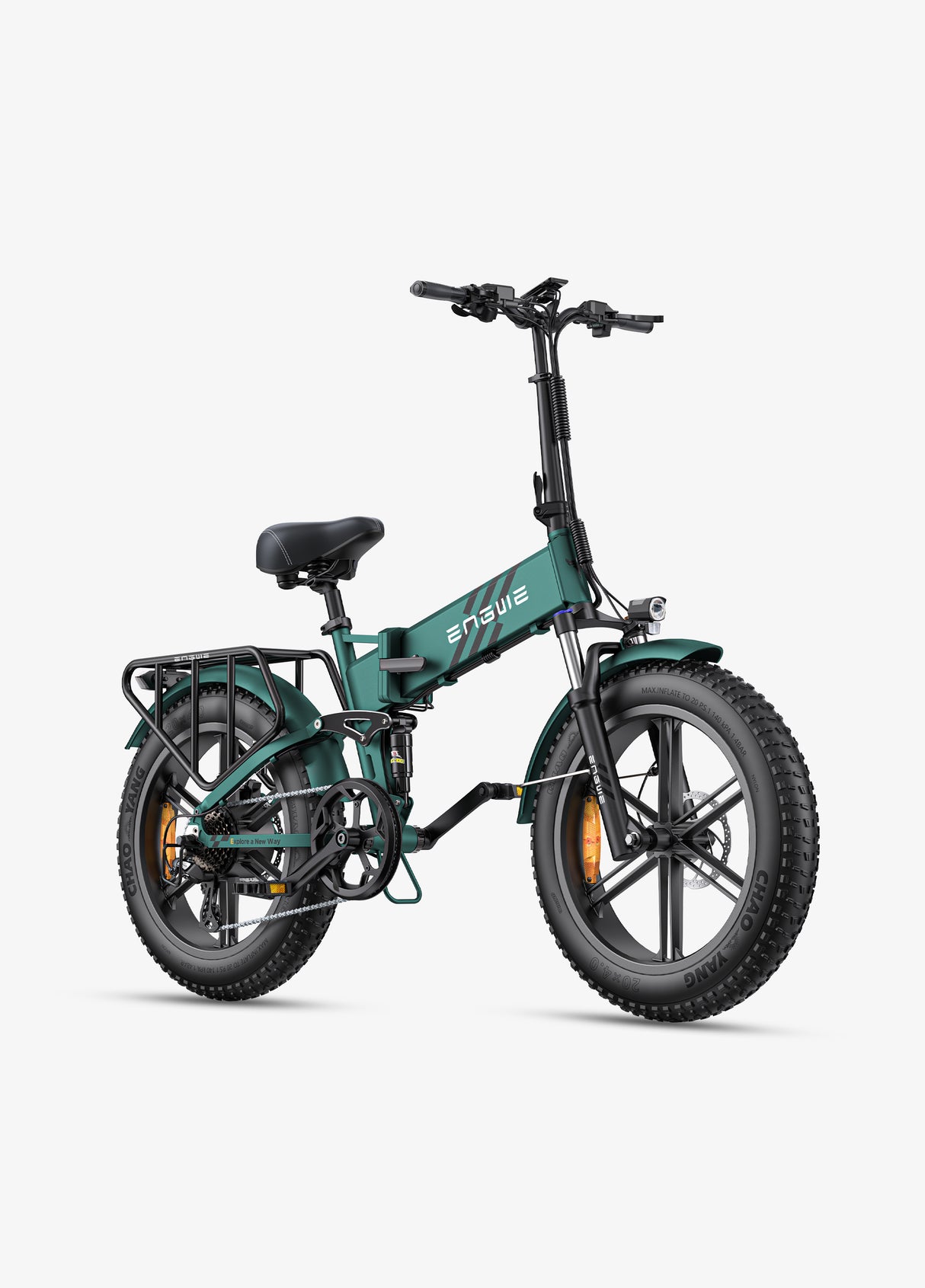

- High Performance 75Nm Motor: Delivering phenomenal acceleration and hill climbing, the powerful high-torque motor combined with a versatile gear system can tackle just about any urban challenge. A high-torque base ensures the bike is not gasping at the edges.
- Advanced Torque Sensing: A basic cadence sensor simply measures if you're pedaling or not, while the advanced torque sensor checks more than 1,000 times per second so it feels completely natural and smooth. It adjusts the output of the motor to match your pedaling force and feels completely natural while riding at higher speeds.
- Full Suspension System: Speed is nothing without control. Both the front and rear suspension work together to offer up to 87% absorption of bumps while maintaining an all-terrain fat tire grip on the road for ultimate traction whatever surface you may encounter.
- Responsive Hydraulic Disc Brakes: Faster speeds require better stopping power. Once you’re ready to stop, the hydraulic disc brakes take full control, stopping with ease irrespective of weather conditions, a vital enhanced safety feature.
- Reliable Design and Shimano 8-Speed Drivetrain: The bike's tough frame was designed for adventure, yet it folds up in seconds. Combined with a Shimano 8-speed drivetrain, you never run out of the right gear for precision power.
Essential Upgrades for a Faster E-Bike
Beyond the motor, in order to unlock speed, you need a full package approach. As your e-bike goes faster, parts that are satisfactory at lower speeds become dangerous safety hazards. Brakes, tires, and even your riding position are going to have a big impact on how in control you can feel and ride at higher speeds. These other little bits are just as important as the performance mods. Here's a feature comparison table between a cadence sensor and a torque sensor.
| Feature | Cadence Sensor | Torque Sensor |
|---|---|---|
| Trigger Type | Detects pedal rotation (on/off feel). | Measures your degree of force on the pedals. |
| The Ride | Provides assist when you start pedaling. | The help is proportional, intuitive, and natural; it feels like an extension of your leg. |
| Efficiency | Not efficient because full power is delivered regardless of your effort. | Battery efficient, gives you the power only when you want it. |
Essential Support Upgrades:
- Brake System: Make the jump from mechanical to hydraulic disc brakes for increased stopping power and more precisely controlled modulation. Opt for bigger rotors (180mm or 203mm) to help manage heat.
- Tires: Use quality tires with an appropriate tread pattern for your riding surface. Make sure they are inflated to the proper pressure for the best grip and stability.
Best E-Bike Tuning Component Brands:
- Motors: Bafang leads the way when it comes to powerful mid-drive and hub motor conversion kits.
- Controllers & Electronics: Grin Technologies has some great field-oriented controllers and cycling computer displays, ideal for bespoke builds.
- Brakes: Magura, Shimano, and Tektro provide high-performance hydraulic braking systems, especially for e-bikes.
What is the easiest, low-risk way to get more speed?
The easiest way is to change the wheel size via your display's settings menu, but first, obviously check to ensure it doesn't put your bike outside the legal speed limit in your local region for safety and legal reasons.
Will tuning my electric bike void the warranty?
Yes, almost without exception. Any change to the controller, motor, and battery that eliminates the factory-preset limits will directly violate the limited warranty.
Is a powerful e-bike better than tuning a cheap one?
You’ll be far better off buying a powerful electric bike that’s already been designed and built from components that can handle larger stresses, like the ENGWE Engine Pro 2.0. This is often cheaper in the long run than converting something cheaper, and it will be more reliable and less maintenance-intensive.
In the end, responsible speed is a combination of smart modifications, legal understanding, and prioritizing safety to get everyone home safely.


