



Even though each one has a specific, perfect electric bike top speed for them, it's a captivating study in finding the right mix of exhilarating power, personal safety, and practical daily use -- not one that I'm sure any car can achieve. And for riders in markets with ultra-stringent e-bike throttle or speed restrictions, that “perfect” speed is not determined by police but by your lifetime, your riding surface, and your sense of adventure. Really, the perfect overall speed is obviously this rate that has been taken for a drive where you'd basically probably just be driving along.
Taking the Low-Speed End of the Spectrum
The best top speed for an electric bike is a very loaded question as it’s all based on what the bike's purpose is. What might be wonderful for a city commuter would be loose or uncomfortable for a trail addict, or much too much bike (and its price tag) for the weekend cruiser. Here's what that “perfect” speed means in a few different scenarios.
The Urban Commuter:
To cruise city streets’ dense traffic, 25 to 28 mph (40 to 45 kph) is typically the sweet spot. It's a speed at which you are not being constantly overtaken by cars. This velocity should be fast enough to match flows in town. It offers the nimbleness to dart swiftly through intersections and make your commute vastly more efficient, and potentially even safer than driving a vastly slower vehicle in traffic.
The Off-Road Adventurer:
On dirt trails and up steep hills, torque is often more important than all-out top speed. But 25 to 35 mph (40 to 56 kph) is exhilarating on an open section of trail. This is the speed that will see riders monster-trucking obstacles, such as roots and logs, realizing the potential of their bike in a realm where there is some room to play.
The Casual Rider:
If your rides are scenic railroad paths or leisurely weekend outings, a top speed of 15 to 20 mph (24 to 32 kph) is probably more than enough. The emphasis here is on comfort, soaking in the scenery, and maximizing battery range, not raw acceleration. A more modest top end lets the bike handle a bit more easily and predictably when cutting through the turns.
The Speed Freak:
On a free market, the enthusiast aims at maximizing speed. It's probably 40 mph (64 kph) or higher for this rider. On this level, the electric bicycle no longer feels like a bicycle and is more full-throttle with superior parts designed for limit-pushing. It reminds the rider of its motorcycle legacy and owns the road.
Navigating Legal Frameworks versus Unrestricted Freedom
One needs a distinction here between what is legally permissible and what is technically possible. Some places, like the EU or regions in the US, have a rating system.
Regulated Markets:
These areas may employ a class system (Class 1, 2, and 3) that restricts motor assist to specific speeds, usually 20 mph or 28 mph. Adapting an e-bike to go faster than this is illegal and will invalidate its pedelec status, insurance, and potentially any road or off-road licensing.
Unregulated Markets:
In unregulated markets, the "limit" is whatever the e-bike hardware and rider's common sense allows. The debate here moves from the pure legalist’s standpoint (compliance to law) to a question of personal sense of risk, safety, and their perception of performance. This freedom means riders can now truly customize their e-bike’s performance and functionality.

ENGWE’S IMPROVEMENT: A Benchmark of Performance and Versatility
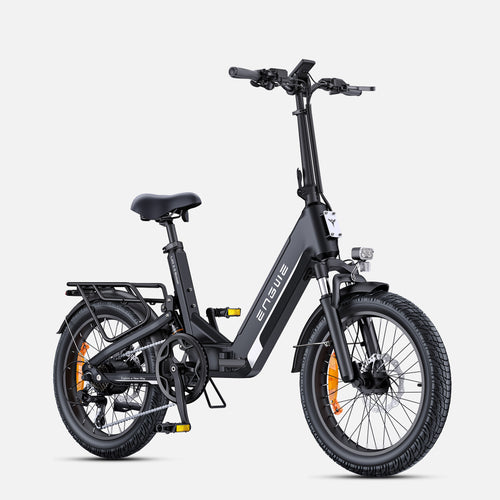
When looking for an E-Bike that is both comfortable and convenient, comfort, power, cutting-edge technology, and price are the only things you should be focused on. With some riders looking for even more from their bike, the ENGWE L20 3.0 Boost stands on its own as what is achievable. This is the best folding commuter e-bike designed for those that refuse to compromise. It’s the world's first full-suspension compact e-bike that’s perfectly at home in any city, on a daily commute, hitting potholes, or going off-road. The highlight is its super unique Boost Mode which provides an immediate 75Nm surge of torque for fast hill climbing and rapid roll-on power to pass cars with ease. The L20 3.0 Boost offers an amazing max range of up to 135 km thanks to a large capacity 48V 13.5Ah battery. And if that is not fast enough, enjoy a full recharge from 0% in less than 2 hours with an industry-leading 8A fast charger. It has one of the most natural-feeling rides with an intuitive torque sensor. Leveraging XC geometry, this is a fast and versatile performance-driven E-bike. Complimented with heavy-duty 180mm hydraulic disc brakes, a solid Shimano 7-speed drivetrain, and a 3.5-inch color display with Bluetooth connectivity, this bike is one high-tech masterpiece! With a 150 kg max load capacity and folding design, it’s perfect for cruising alongside you or in tight spaces such as a commuter train. Enjoy the comfort of an incline up to 15°!
How to Unlock the Potential of Your E-bike
For people traveling in areas without speed restrictions or those who only ride on private property, now you can unlock the full speed of your e-bike. I would do this only after assuring it is safe to do so. There are plenty of tutorials on YouTube for specific models.
Software Unlocking: The Digital Key (Protocol)
This is the least invasive and most commonly used approach. It typically requires accessing hidden menus in the bike’s display or using a smartphone app.
Method 1: Unlocking through the Onboard display
If your onboard screen allows you to access the Power UI, you can use it to unlock. Some e-bikes have secret settings that you can access with a certain button combination. There are typically five steps to the process:
- Power On: Power on the e-bike’s display like you normally do.
- Access Setup: Long-press some buttons (such as the up and down keys simultaneously) to get to the setup/advanced settings menu.
- Find Speed Limit: Go through the menu until you find something named "Speed Limit" or some equivalent.
- Increase Limit: Use the up or down buttons to increase the speed value to the maximum setting.
- Set and Press to Exit: Press the "Set"/"Mode" button to affirm. In the next screen, you need to jog left so it moves off the speed setting and then press "Back" (you may also need to hit "Back" one more time to leave the setup menu). This sequence confirms the unlock, which is a secret process.
Hardware: The Old-Fashioned Way with a Real-World Upgrade
If a software unlock is not feasible, a hardware modification will be the way to go. This is a little more complex and will appeal to those with some basic electronics skills.
Method 2: Replacing the Controller
The controller is the brain of your electric bike, and the speed limit is programmed in its firmware. Replacing it with an unbounded controller will definitely work.
- Source a New Controller: Look for and buy a new controller that is compatible with the voltage of your bike’s motor (48V), while having a higher amperage value for more power.
- Get Your Tools: You’ll probably need a set of Allen keys, screwdrivers, wire cutters, and zip ties. Wiring: If possible, take pictures of any wiring before you start.
- Disconnect the Battery: This is the most important safety step. WARNING: Always unplug and disconnect your battery before working on any components.
- Finding and Replacing: The controller is housed in the frame or a case close to the back wheel. Gently disconnect all the plugs from the old controller; you will need to know where each of them goes so you can plug them into your new controller.
- Test Ride and Secure: Reconnect the battery and turn the bike on. Test the throttle, pedal assist, lights, etc., before tidily fitting the new controller and all the wiring.

Discovering the Speed Sweet Spot—An Overview
To give you an idea of what your target speed should be or what the sweet spot is for so many in this area, the following rider profiles are provided.
| Rider Type | Application | Recommended Speed | Key Considerations |
|---|---|---|---|
| Urban Commuter | Daily city travel | 25 - 28 mph / 40 - 45 kph | Maneuverability, stopping power, visibility to stay with traffic |
| Trail Rider | Unpaved country roads, wooden trails | 25 - 35 mph / 40 - 56 kph | Torque for climbing, suspension strength, tire grip |
| Leisure Cyclist | Park paths, scenic roads | 15 - 20 mph / 24 - 32 kph | Battery range, comfort, ease of use, low maintenance |
| Speed Demon | Open land, private property | 35+ mph / 56+ kph | Rider skill, frame integrity, advanced brakes, legal use |
In the end, the best e-bike speed is the one that allows you to create a great ride for your day, your environment, and your personal level of adventure.
Frequently Asked Questions
1. Is unlocking my e-bike's speed illegal?
It all depends on local laws and where you are riding. In many countries, the modification of an e-bike to get it to go faster than the speed limit on public roads is prohibited. But it’s generally allowed on private land. Always check your local regulations.
2. Will unlocking the speed void my warranty?
Almost certainly, yes. Any change to how the e-bike came from the factory as far as electronics or hardware is generally considered a direct breach of warranty terms.
3. Does a faster top speed drain the battery much faster?
Yes, significantly. It is not a linear one-to-one relationship between speed and energy used. You go through way more power leaving the motor spinning at high RPM if you’re trying to move quickly, even with a bigger battery.
4. Do I need stronger brakes if my e-bike goes faster?
That is highly recommended and a major safety concern. More speed equals more kinetic energy and needs much more force to stop. If you really crank up your top speed, then you will definitely require high-quality hydraulic disc brakes with larger rotors for safe riding.
5. How can I find the easiest way to unlock my specific e-bike model?
YouTube is a good place to start looking. Search for video tutorials and guides from other owners using your exact e-bike model name with keywords such as "speed unlock," "derestrict," or "remove speed limit."


