



Really, the question is a paradox in itself. How can an e-bike be completely lawful and go 30+ mph (48 km/h) when so many come in a 25 km/h (15.5 mph) option? The answer is easier than you could have imagined and has nothing to do with a legal quirk, but the hidden potential written into many up-to-date e-bikes. For riders in speed-limited markets, or simply on private property where speed is unrestricted, the process for unlocking this increased potential is as simple as it gets. We’re going to take you through how to safely and simply release the full potential of your e-bike and turn it from a stately meander into an exhilarating adventure.
Understanding Speed Limits and Legality
Before you try any of these yourself, it is important that we explain where e-bikes stand from a legal standpoint. In some places such as the EU and certain parts of North America, e-bikes are legally categorized (Class 1, 2, 3) with speed limit rules for motor assistance. These rules are put in place to keep people safe on shared roads and paths.
But many global markets are not as restrictive in terms of throttle or speed. And this kind of legal cap usually only refers to public roads. This means that for use on private property (like on your land, at a race track, or in an unregulated area), you’re often going to be free to utilize the full hardware potential of your e-bike. In this case, legal means you get to ride an unrestricted high-power e-bike inside the confines of local laws. Always research and obey the laws that are specific to your area before taking a modified e-bike on public streets.
The Road to Faster Speeds: Software Versus Hardware
There are generally two ways to unlock the speed of your e-bike, one by adjusting the settings in its software and the other with new modification. For most riders, software-based solutions are the best place to start as they’re free (or almost-free), reversible, and need no special tools. Hardware modifications are for the serious hobbyist who refuses to let performance be bound by stock hardware.
Here’s a detailed comparison to help you figure out which is right for you:
| Feature | Software Unlocking | Hardware Modification |
|---|---|---|
| Price | Free or low-cost | Moderate to Expensive |
| Level | Easy to Moderate | Advanced, you need some technical knowledge |
| Tools Needed | None, or your smartphone | Wrench set, wire strippers, connectors, etc. |
| Risk Level | Low; may void warranty | High; risk of harm to the battery or components |
| Reversibility | Typically easy and totally reversible | Hard or impossible to reverse |
Software Unlock: Your Best First Option
The great news for most e-bike owners is that the speed restriction often amounts to little more than a line of code in the bike’s controller. The manufacturers set these limits to match various international laws/rulings but the hardware isn't necessarily limited in that way. Many of these settings are easily found and accessible yourself. Just do a YouTube search and you’ll find dozens of how-to tutorials for different models.
Method 1: Speed Up Through the Display Settings
One of the popular ways to go about this has got something to do with a hidden menu inside your e-bike’s LCD display. The process may feel a bit mysterious, but it tends to work very well.
Step 1: Power on: Switch on your electric bike’s display as you would typically do.
Step 2: Enter Settings: Press and hold two buttons at the same time to enter the settings. Typically these are the "Up" and "Down" arrow keys.
Step 3: Find and enter the Speed Limit menu: Access the main setup screen, and browse through options using the arrow keys until you land on “Speed Limit” or a similar menu.
Step 4: Raise the Limit: With your choice selected, press up using the "Up" button to increase it up to its maximum value. This could be a number such as 31, or 40, or higher depending on the model.
Step 5: Set and Slowly Back out: Press the "Set" or "Mode" button to select the new value. The following section is especially important for those with hidden options on their device. You will probably have to hit the "back" button one more time to get out of speed setting mode and again to exit the entire setup menu. Be patient and deliberate. Returning back to the main screen does the trick.
Method 2: Speed Through a Companion App
Most modern e-bikes can communicate with a smartphone app over Bluetooth, tracking rides and providing diagnostic information. This app might also serve as a gateway to discovering performance.
Step 1: Download the App: Look for your e-bike’s official companion app in your phone’s app store. If one exists, download it.
Step 2: Sign Up and Connect: Make an account and power on your e-bike. Open the app to scan for and connect your bike over a Bluetooth connection.
Step 3: Locate the Classification Setting: After you’re connected, dig around the app’s settings. Find something like a menu item that indicates the bike’s legal status, which might read “Class 2” or display a speed limit.
Step 4: Switch (To an Unlocked Class): Tap this option. The app will likely have an option, such as “Unlock Class 3” or a basic switch to bypass the speed governor.
Step 5: Confirm the Change: The app may display a warning and there could be a brief countdown. When it counts down, click "Agree" or "Confirm." You have now activated a sportier mode on your bike.
Selecting a good E-bike: The Base of Your high-speed electric bike
Not all e-bikes are made equal. To safely and dependably rocket up to 30 mph, you need a machine installed with sturdy construction, a reliable motor, and a high-capacity battery. At the same time, you strongly require excellent brakes. This is where having a good brand comes into play. ENGWE has led in developing rugged, powerful, and adventure-ready e-bikes which are the ideal platform for performance. They use quality components on their bikes that hold up to higher speeds.
The ENGWE EP-2 Boost is the perfect example of a versatile and powerful e-bike. This is an adventure all-terrain fat tire electric bike that will do just as well off-road as it will in the city. Thanks to its smart torque adjust system, SelecTrack allows for unprecedentedly smooth and responsive pedal assist – all so you can enjoy a more intuitive ride. When the situation demands a powerful accelerator or to win that 2-way hill, during Amp Up (Boost Mode), instantly feel 55Nm of torque with Rocket propulsion. The massive 20x4.0 fat tires and super stable one-piece wheels are for any type of terrain from sidewalk to street to trail. With a very good long-range battery with autonomy up to 120 km and its comfortable folding frame, making storage and transport really easy, the EP-2 Boost is your best friend in every situation whether it be to go shopping or on an adventure. With a solid build quality and use of only the best components, it makes it an ideal and dependable option for those who are looking to release the full potential their machine has to offer, where applicable.
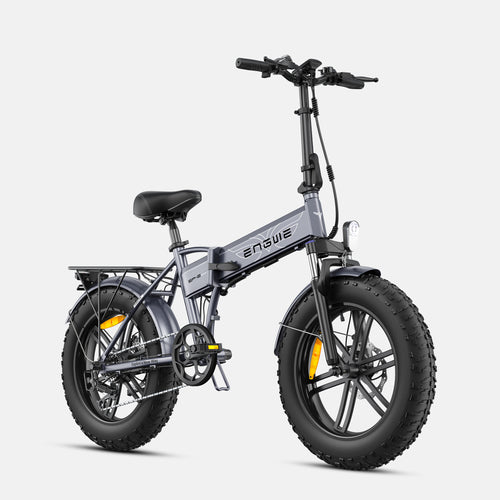
- Motor: 250W Brushless Motor
- Max Torque: 55 Nm with Boost Mode
- Battery: 48V 13Ah Removable Lithium-Ion
- Max range: 120 km (in PAS 1)
- Brakes: 180mm Mechanical Disc Brake
- Tires: 20” x 4.0” All Terrain Fat Tires
- Drivetrain: Shimano 7-Speed
- Sensor: Torque Sensor
- Wheels: Tough One-Piece Construction
- Max Load: 150 kg (330 lbs)
- Features: Folding Design, Suspension Front, LCD Display

Hardware Mods: The Serious Tinkerer
If software unlocks are not fast enough for you, or if your bike is hard-locked, then it's time to look at hardware modification. This would be a more technical, more invested (in terms of time and money) route that is riskier.
-
Controller upgrade
The controller is the "brain" of your e-bike, determining how much power the motor will receive from the battery. A controller with a higher amp rating can increase speed and acceleration quite a bit. That means unplugging the old controller and wiring in the new one.
-
Motor Upgrade
If you really want to go crazy, the motor can be swapped out as well. A 500W or 750W motor will give you very significant gains over your 250W motor. This is the most difficult and expensive upgrade.
One caveat: messing with the hardware is likely to void your warranty. It does take a basic level of electronics knowledge as wrong wiring can kill the controller, battery, or the motor.
At 30 mph, Safety is no longer optional
Riding at fast speeds is exhilarating, but it in effect changes the safety equation.
-
Braking Power
Your ability to stop is significantly more important than your ability to go fast. Make sure your e-bike features superior 180mm mechanical or hydraulic disc brakes. If you up your speed, think about upgrading brake pads or the system.
-
Protection
You must have a helmet. At 30 mph, you better have a GOOD certified helmet. (It is also recommended to wear gloves, eye protection, and protective clothing.)
-
Practice
Once you've unlocked your new bike, try it out in an environment without too much to crash into until you're accustomed to the faster acceleration and higher top speed.
Reaching 30 mph is a realistic target that will unleash a new level of freedom and fun on your e-bike.

Frequently Asked Questions
1. Does unlocking my e-bike violate the warranty?
Almost certainly, yes. Nearly all manufacturers regard altering the speed limiter (software or hardware) as a breach of their terms and conditions, voiding the warranty. You should be aware of this going in.
2. What impact does unlocking my e-bike have on the battery range?
It affects it significantly. The relationship between speed and energy use is not linear – with every doubling of your speed comes a quadrupling in wind resistance. Going that much faster will result in half the distance on one charge.
3. Is it dangerous to ride an e-bike at 30 mph?
It can be — unless you ensure three things are up to snuff: the bike, the gear, and you. A solid bike with strong brakes is a must; a certified helmet is non-negotiable, and you also have to be confident in dealing with increased speed.
4. Can any electric bike be hacked to 30 MPH?
No. The ability to reach higher speeds depends on the motor's power and the battery's voltage. Low-powered or budget e-bikes may not have the hardware to reach 30 mph even with software limits bypassed.
5. Are new brakes necessary if you upgrade your top speed?
It is very highly recommended. The bike's stock brakes are designed for its legal speed. When you greatly increase that speed, you also increase the kinetic energy that has to be dissipated when you slow down. Getting better pads or a hydraulic disc system is a critical safety upgrade.


